
Concrete Action for Biodiversity
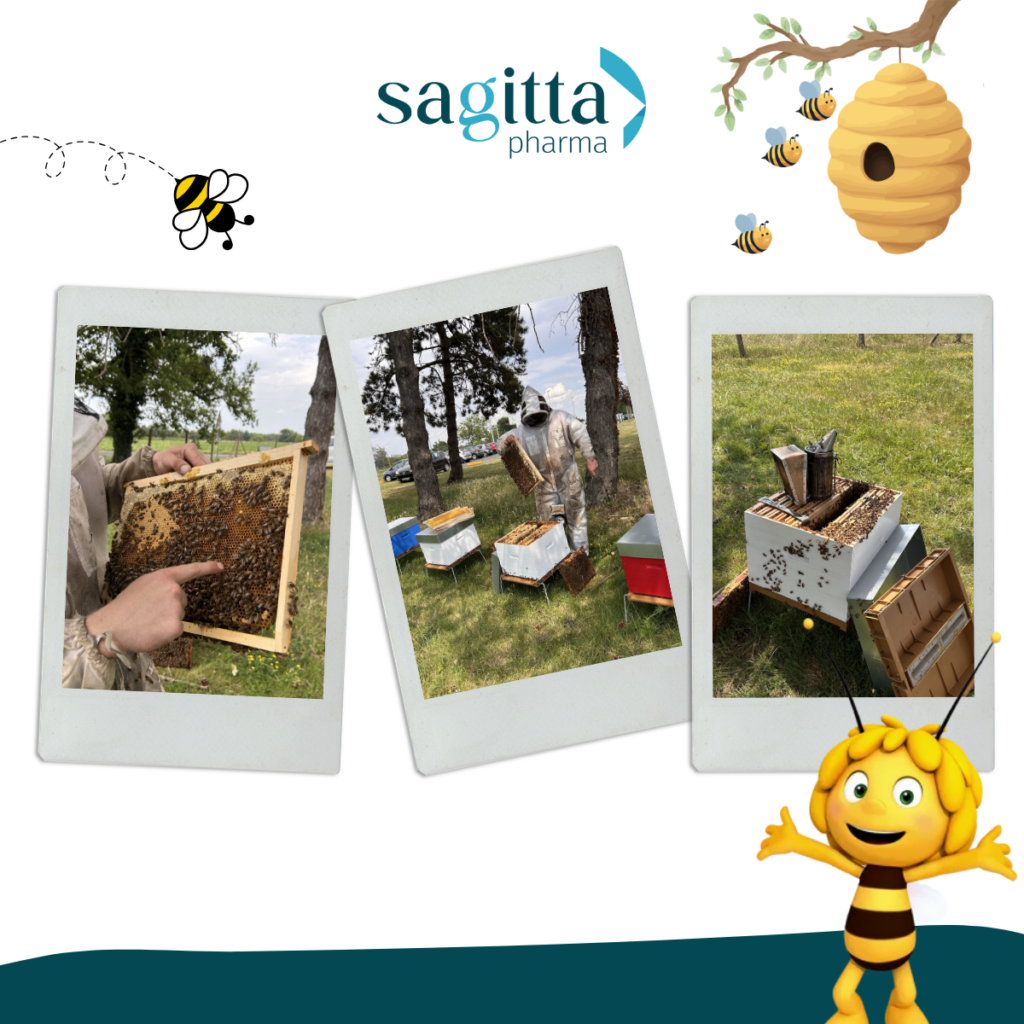
Sagitta Pharma now hosts beehives in the garden at its Fondettes site, in the heart of Touraine.
This initiative is part of the company’s CSR strategy, with a simple goal: to integrate biodiversity into the site’s daily operations and raise awareness among staff about the role of pollinators.
Bees and other pollinating insects play an important role in the reproduction of wild and cultivated plants. The French Office for Biodiversity notes that they contribute to the richness of ecosystems and that it is essential to better understand them in order to better preserve them.
A local project, supported by a beekeeper
To set up and monitor these hives, Sagitta Pharma is assisted by a local beekeeper who handles the installation and maintenance of the swarms.
This approach helps anchor the project in the local community and ensures appropriate support. It also gives employees the opportunity to gain a more hands-on understanding of how a hive works, the beekeeper’s craft, and practices that benefit pollinators.
Four hives and more than 120,000 little worker bees have now made their home on the Sagitta Pharma campus.
A CSR approach that also extends to the workplace
CSR is reflected not only in commitments but also in actions that are visible and understandable to everyone.
The installation of beehives in Fondettes helps give biodiversity a tangible presence on the site. It complements the initiatives already undertaken by Sagitta Pharma in the areas of environmental responsibility, quality of life at work, and community engagement.
This approach aligns with national priorities for the protection of pollinators. The 2021–2026 National Pollinator Plan aims, in particular, to restore their habitats, improve their food sources, and strengthen efforts to protect them.
Taking Action at Our Own Level
Hosting beehives alone does not solve biodiversity challenges. But it is a concrete and truly beneficial action on several levels.
In Fondettes, this project brings Sagitta Pharma’s CSR initiative to life in a simple way while collaborating with a local partner.
It’s a way for us to take action on our own scale, with dedication and consistency.
Sources
- French Office for Biodiversity, “Welcome to the World of Pollinators.”
- Ministry of Ecological Transition, “Launch of the New National Pollinator Plan 2021–2026,” December 12, 2022.
- Ministry of Agriculture, “National Plan for Pollinating Insects and Pollination 2021–2026,” November 21, 2021.